“Toxic Masculinity” is a Scam
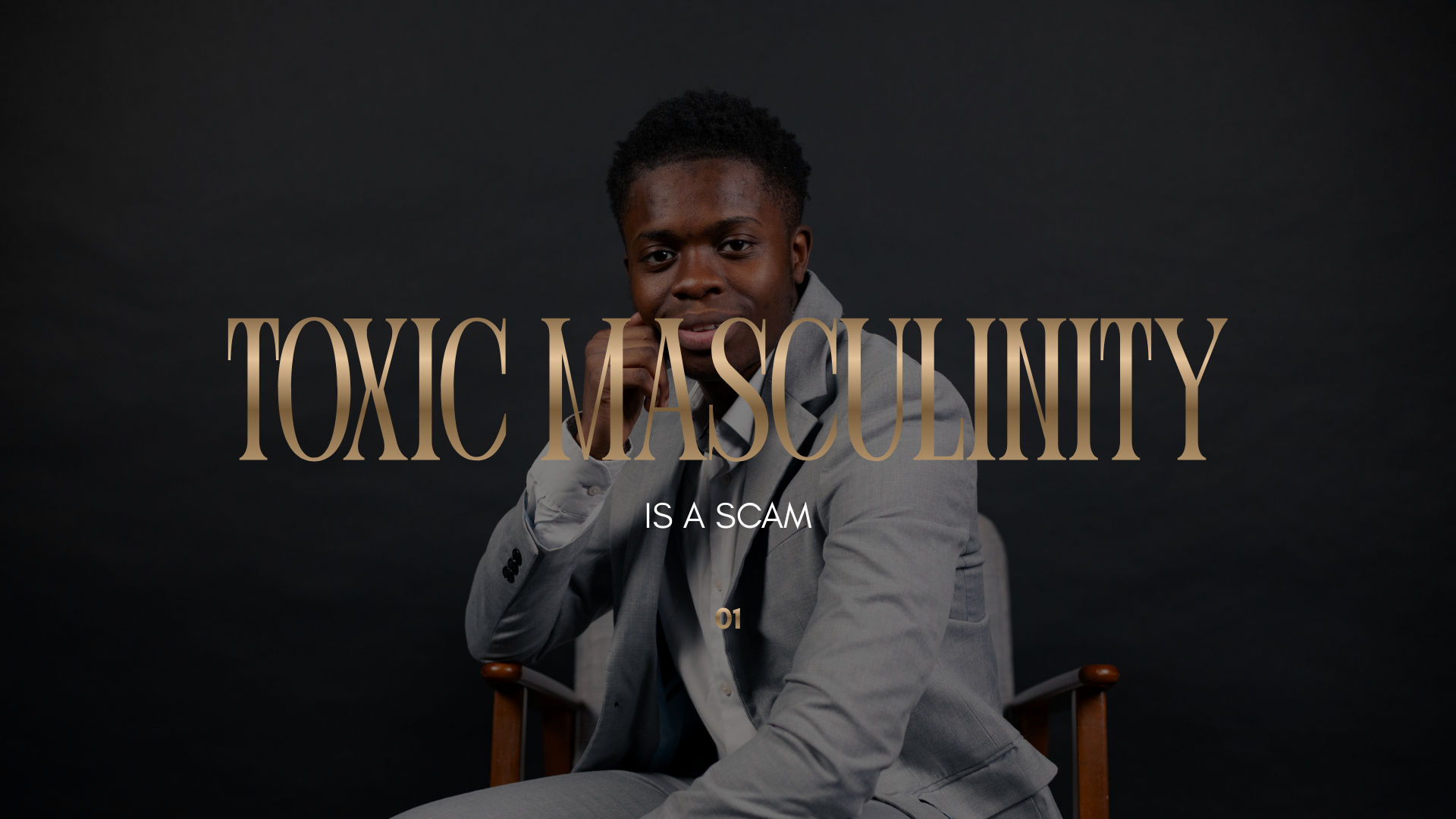
(2025) Seated comfortably on a brown chair, David exudes a quiet confidence, embodying the thoughtful presence that characterises his work. The chair’s rich, earthy tones complement his measured approach to complex discussions on politics, morality, and religion, inviting reflection and deliberate insight.
Well, where do I start? I think that this is arguably one of the most controversial topics in the western world - but I think that no matter what side of the coin you find yourself on, we can definitely all agree that there are certainly plenty of ambiguous definitions thrown around that absolutely do not help with clarity.
My name is David, and welcome to the debut episode of “Controversy Sells” a brand new blog series highlighting some of the most (in my opinion) engrossing topics in media, news, culture, and more - to find truth, and reveal interesting perspectives.
First thing’s first, if you haven’t been living under a rock for what seems to be the last decade, you would’ve (at some point) heard the term “toxic masculinity” which is typically lumped in with other phrases such as “misogyny”, “mansplaining”, and others.
But, what actually is “toxic masculinity”?
According to Wikipedia.org:
“Toxic masculinity is a concept used in academic and media discussions to refer to those aspects of hegemonic masculinity that are socially destructive, such as misogyny, homophobia, and violent domination. These traits are considered "toxic" due in part to their promotion of violence, including sexual assault and domestic violence. Socialization of boys sometimes also normalizes violence, such as in the saying "boys will be boys" about bullying and aggression.”
For anybody wondering “hegemonic” is described as “legitimising of men’s dominant position in society.”
The definition for toxic masculinity encompasses use of language in conversation to describe “socially destructive” viewpoints. Of course, the definition proceeds to describe misogyny (the hatred of women), homophobia (the hatred of gay people), and “violent domination” which is pretty self-explanatory.
To illustrate firmly, my position stands strong, and I am against any kind of sexual assault, domestic violence, and abuse of any kind. Such instances of criminal activity should be promptly reported to the local authorities / state police, and dealt with via legal process in order to serve justice and deliver any victims who have been subject to abuse.
Why then, is “Toxic Masculinity” a Scam?
I say that although I acknowledge that damaging ideologies exist (and there a few bad apples) I believe that individuals should always be judged as individuals, on an individual basis. Unfortunately, what probably started as a legitimate term to describe a hurtful concept of people doing wrong things has turned into any person who wants to live some sort of traditionally conservative life (namely: deciding to prioritise family over career, advocating that men should be strong, and deciding to believe strongly in the divine) being called toxically masculine.
Don’t take my word for it, see Wikipedia’s further explanation:
“This concept of toxic masculinity does not condemn men or male attributes, but rather emphasizes the harmful effects of conformity to certain traditional masculine ideal behaviors such as dominance, self-reliance, and competition.”
“Toxic masculinity is thus defined by adherence to traditional male gender roles that consequently stigmatize and limit the emotions boys and men may comfortably express while elevating other emotions such as anger.[14] It is marked by economic, political, and social expectations that men seek and achieve dominance.”
First of all…
“does not condemn men or male attributes […]”?
My response to this? The baby has been absolutely thrown out with the bathwater. As somebody that personally believes that “masculine ideal behaviours such as dominance, self-reliance, and competition.” are simply inherent to anybody who is biologically male, I believe it is a massive dishonesty to nit-pick finding all the things wrong with being a man and saying they are the cause of any instance of abuse. When you define a term by looking at another term and seeing controversial figures who subscribe to the latter term (ascribing wrong-doings to them), you automatically demonise everybody who fit into the category of the first term.
Let me give an example:
Person A believes in eating meat as the only source of true nourishment.
Person B analyses Person A’s beliefs and disagrees with this, believing that there are other forms of nourishment that better align with their personal life principles, and are better for society at large (especially environmentally).
Person A maintains their belief, and progresses to illegally exhibit dangerous actions (such as hunting animals for food).
In this instance, Person A clearly has a strong position that they are willing to personally defend and explore (even illegally). While Person A is objectively wrong for engaging criminal activity, it would be completely fraudulent for anyone to claim that Person A’s original belief (“eating meat as the only source of true nourishment.”) as a belief that people should be cautious to engage in. Person A was an INDIVIDUAL, and in this case, a radical or harmful extremist for his viewpoints, but if another person (Person C) comes along holding the same original belief as Person A, they should not be vilified.
This is the exact same as “Toxic Masculinity.”
Furthermore (also stated on Wikipedia):
“The concept has been criticized by academics for being poorly defined or under-defined; for promoting biological essentialism; for being ideological and yielding little empirical research on violence; for individualizing structural or systemic issues; for promoting a simple "toxic/healthy" binary that is unhelpful or harmful; for lacking intersectionality and failing to account for global cultural and class-based differences in expressions of masculinity; for being used to target men belonging to marginalized groups; and for being harmful to male mental health.”
I couldn’t agree more with the many points of criticism that the term phrase faces. While generalisations can assist in discussions, “Toxic Masculinity” is unfortunately a different case where there is just too much nuance to throw around the term loosely. I also add that the most painful part of all is that many people do not conduct their own individual research, and have little desire to discover the full meanings behind media headlines. This causes the imbalance and social impact of people (who stood in good faith) being deceived into thinking that instances of masculinity are all promoters of “violence” therefore, “toxic masculinity” - thus making the phrase weak in itself and hard to actually define.
In a world that is now very different to history, I see many beautiful things about masculinity and keeping to traditional values. A few things I can name are the many different ideas behind “duty” and what this has meant to men throughout time. Fundamentally (the countless times media and institutions don’t want to record), men have shown kindness to people around them, and treated people with respect as part of obligation. Additionally, men have fulfilled provision-driven roles of yielding, toiling, production, hunting, and aspects of modern professions and positions (doctor, athlete, engineer, etc.) being an extension of this core “duty.”
Final Thoughts
I can go on, and on about the many things that men have done that should absolutely be championed, and highlighted. The objective is not to oppress women, but identify that we can always uplift one another despite our opposing, or (in the case of traditionally conservative women) similar viewpoints.
It is the same masculinity discussed that has empowered some of the greatest world leaders, brought the world together, and destroyed segregational barriers between the sexes, and I believe that we should all live in a world (especially in the western world) that affords people the liberty of choice of behaviour.
Moral of the story? People are people, and while they do wrong things and there are consequences, they are not an entire representative of others (and especially should not be in a court of law).“Toxic masculinity” has become a catch-all phrase that blurs nuance and punishes normal, healthy masculine traits. My hope is that this conversation encourages people to see individuals - not stereotypes - and to judge actions, not identities.
That brings things to a wrap for this episode. Thanks for reading, and I hope this enlightened you and sparked some insight. Share with a friend and have a discussion about what you think, and I'll find you on the next episode of: Controversy Sells.